
Timber processing done right.
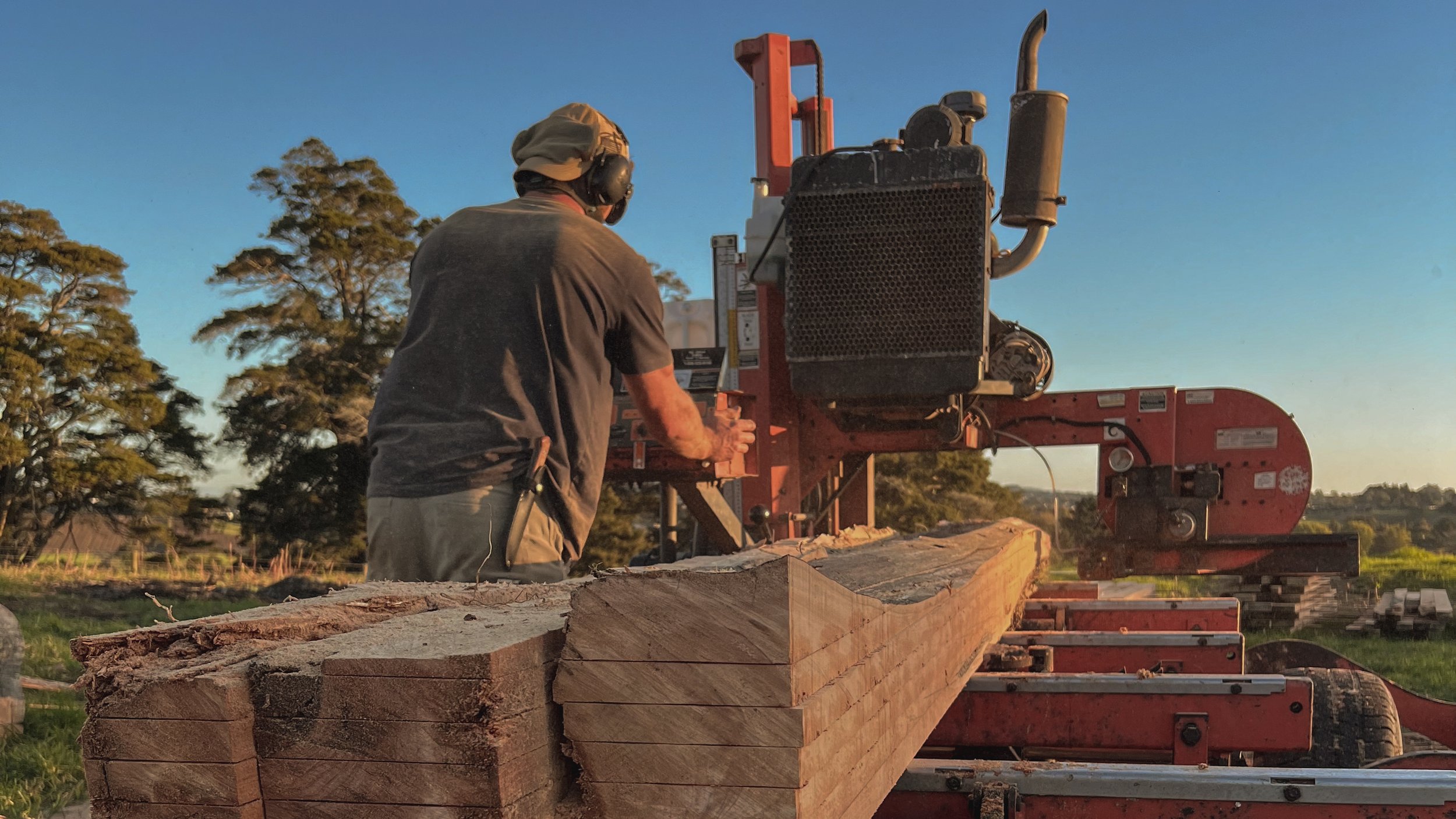
Specialising in locally harvested timber, helping use New Zealand’s natural resources better.

The Mission
The vision is simple, work alongside our customers to better utilise natural resources, processing locally harvested wood sustainably and responsibly.
Our Services

Running a Wood-Mizer LT40 and a Granberg Alaskan mill we mill trees and logs on-site.

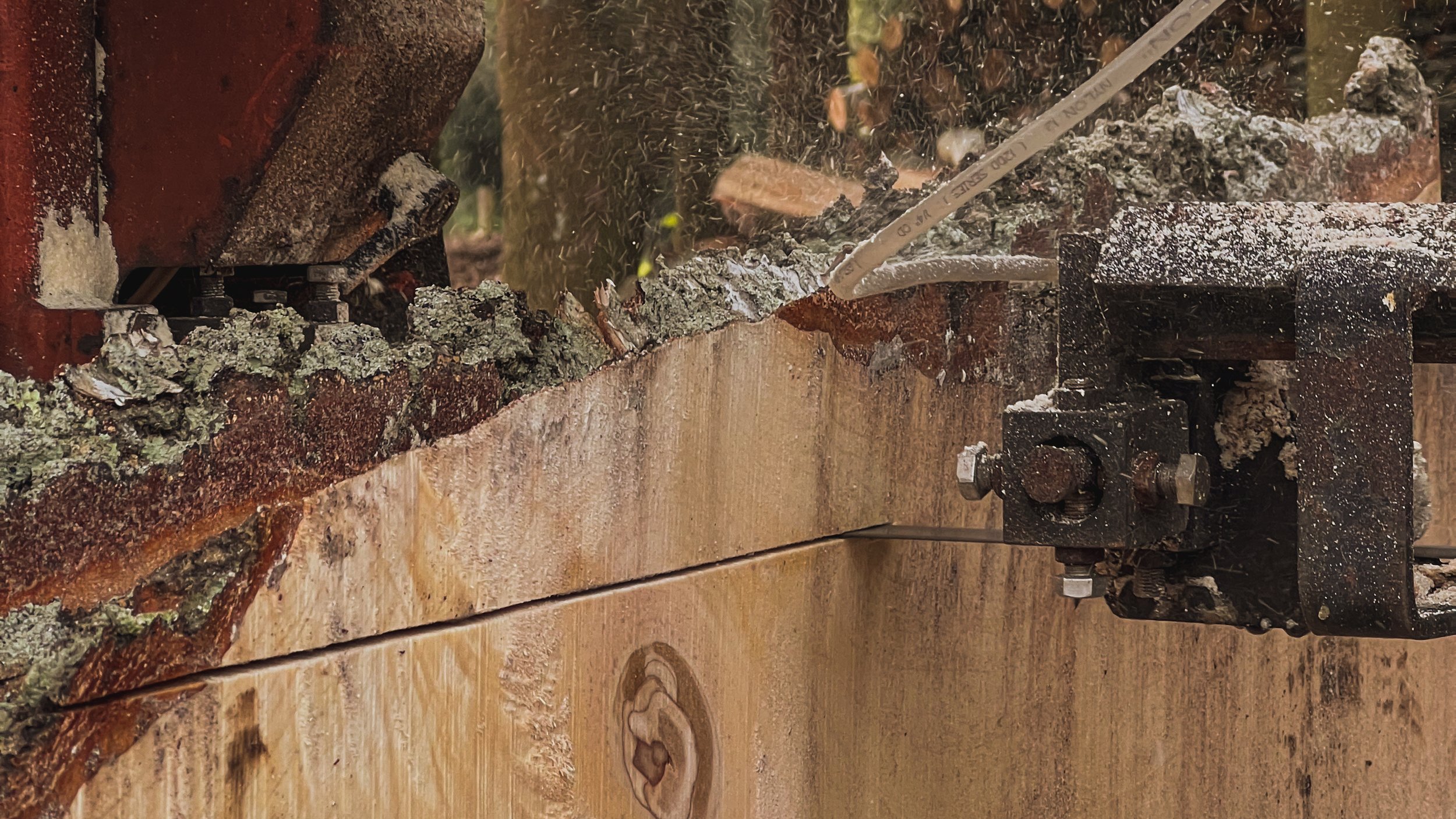
Helping to keep others cutting, we offer a band sharpening service for other sawyers who don’t have their own blade maintenance.
At The Dusty Carpenter, we work alongside our customers to get the most out of their material. Whether it is milling a plantation into dimensional timber or crafting a bespoke table out of the tree planted by Grandad, we can help.
The Who
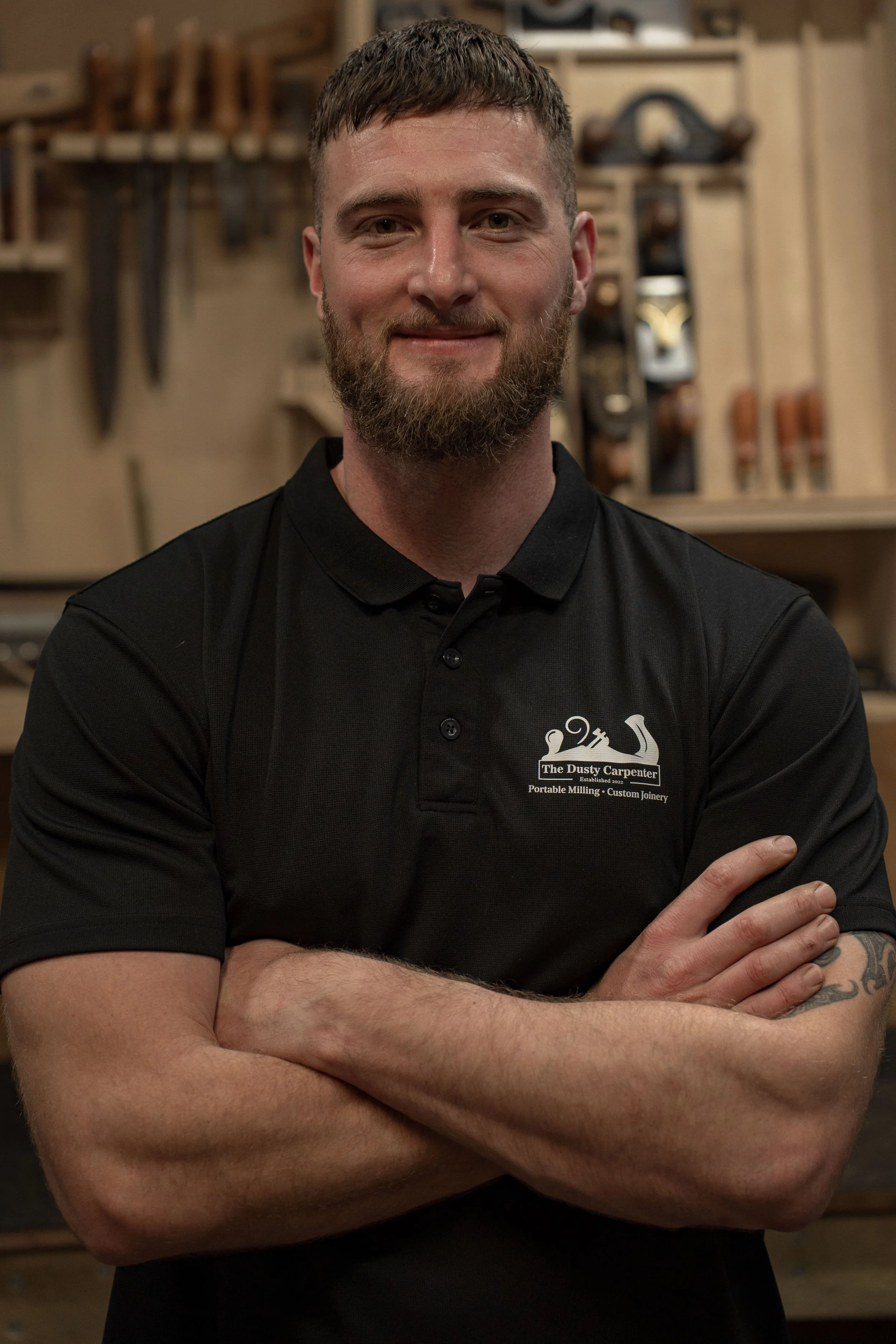
My name is Finn Walker. After six years as an Engineer Officer in the New Zealand Defence Force I decided to embrace my passion for timber and establish a full time portable sawmill and bespoke joinery business based in Waikato.
I use a Wood-Mizer portable sawmill to mill wood, learning the skills from my father, who was in the forestry and portable sawmilling industry for over 20 years.
Spending time in the workshop was always an great release and passion of mine. After spending the majority of the day in an office, there was nothing quite like seeing a idea come to life.
FAQs
-
That depends on several factors and it can have a very large impact on overall production.
1. The condition of the log is a big factor, a long straight log with no branch extrusions makes it much easier to mill. If the log is oversized in diameter, has large kinks or bends in it, branches stemming out or is very short (less that 1.5m) then the time to mill increases.
2. Another important factor is what sized lumber I am cutting to. The smaller the lumber size, the more cuts I must make, therefore the more time that it takes. For example, cutting 200mm by 50mm railings will take a lot less time than cutting 30mm by 50mm battens.
3. It also depends on whether there is anyone there to assist me or not, and what machinery you have available. If there is I can focus on milling and do not have to worry about stacking or filleting the lumber.
As a rough calculating figure, I can average between 6 to 10 logs at 500mm-600mm in diameter and 5m in length. Please note that this is a rough figure and will depend on the above factors.
-
The area I need to operate the mill is relatively small. However, it is always better to have a bit of space to stack the wood, have the logs ready and move machinery around. At a minimum I can work in an area 8m by 4m, with room to park my truck close by. An ideal size is anywhere from 12m by 8m.
-
I only need a single person to assist. Often, they will be waiting for me to finish cutting lumber before being able to move it and stack it, so any more than that is usually an overkill. If they can operate a chainsaw that is a bonus, but not a critical requirement.
-
The timber is rough sawn but often comes out extremely smooth, requiring only 1 or 2 passes through a thicknesser to get the desired finish. The mill is very accurate and produces lumber to within 1-2mm repeatably.
-
This depends on the method used. For air drying timber there are a lot of factors going into it. I have written an article here detailing the best method of air drying (to my knowledge and experience). As a rule of thumb, I recommend 1 year per 25mm of thickness.